TRAVEL

TRAVEL

Saturday, July 2, 2022


PUTIN'S RUSSIAN INVASION OF UKRAINE AND THE UNLEARNED LESSON OF THE RUSSO JAPANESE WAR


The recent tensions around Ukraine have brought the world to the brink of a global confrontation. Europe has not faced such a massive threat since the end of the Cold War. It seems that Putin has decided to risk it all in a single bet and gain his point by threatening a global confrontation and full-scale intervention in Ukraine. While most Western observers are concerned about the fate of Ukraine, the other face of the conflict concerns the fate of Russia. How might the future of the Russian Federation develop because of a possible war with Ukraine?

Break the Backbone of Revanchism

In one of his interviews, Sergey Karaganov, a leading Russian political theorist, gave voice to an idea that, in my opinion, is the answer to the only possible future for Russia. His interviewer told him that the well-being of Austria and Germany improved considerably after they gave up their claims to global power, suggesting a comparison between Nazi Germany and Putin’s Russia. In response, Karaganov bluntly stated that, unlike those countries’ spine, Russia's backbone has never been broken: “We are a nation of conquerors … while they were conquered.” For Karaganov, the unbroken backbone actually means an opportunity for revanche, or the return of a nation’s lost territory. But a war loss may actually be the only way for Russia to return into the family of nations.

The comparison between Nazi Germany and Putin’s Russia, which has become common recently, may have something to it. Both cases are characterized not by a sane politics but by revanchism and ressentiment. In his thinking, Putin opposes Russia to NATO and seeks to return to the global distribution of spheres of influence as it existed in 1997, prior to NATO’s expansion to Eastern Europe. He sees NATO’s subsequent expansion to the east as a betrayal, and considers revenge for this treachery to be righting a historical wrong. The Kremlin’s ideological claims to Ukraine show the true face of the matter, which admits no compromise: there can be no stable Russia in the foreseeable future, or peace and security in Europe, so long as the Kremlin deems its claims unpaid. The demand to bar Ukraine from NATO, which would violate NATO’s charter, proves that Putin is seeking conflict and is looking for a reason to be first mover. For the Kremlin, it is the military scenario today that is the primary tool for achieving the desired result: Russia’s return to greatness and restoration of its sphere of influence.

All of this has echoes with the situation on the eve of World War II. Germany and Hitler sought revenge for Germany’s shameful defeat in World War I. Hitler did not want to agree calmly on new lands or boundaries of influence, as the Munich Treaty showed. He wanted war. Today, this horrible lesson needs to be revisited. When dealing with revanchism and ressentiment, it is impossible to reach a rational agreement on peace and stability.


All countries recruit young men and women to go to war. They die and their families hope against hope that they died for a higher purpose.

So many do not die for a higher cause but just for some egotistical narcissist, megalomaniac with greedy fantasies of the possibilities of gaining power, money and delusions of grandeur and glory.


What a 1904 War Can Teach Vladimir Putin


The Russo-Japanese War led not just to an immediate revolution, but to deeper and longer-lasting change years later.
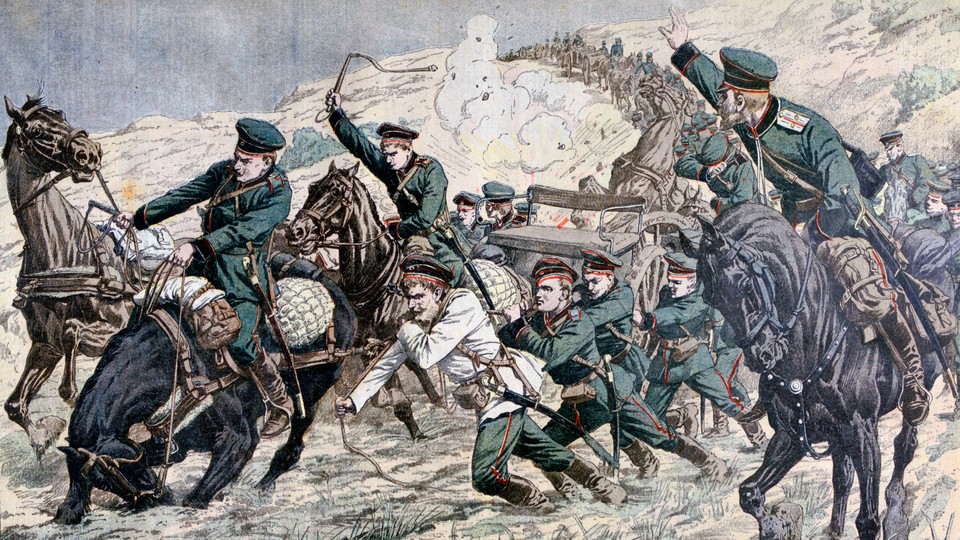
A Russian column trying to make progress along a muddy road during the Russo-Japanese War (Art Media / Print Collector / Getty)


When, in an expansionist mood, Russia embarked on an ill-judged war of territorial conquest against its neighbor, it did so with a grandiose sense of its conquering power. Russia’s leader, who ruled nearly as an absolute monarch and held his counterpart next door in contempt, believed that his country’s interests were threatened, that Russia deserved more influence and respect. He had envisioned a scenario in which his enemy would yield quickly in the face of overwhelming odds and accede to Russian territorial demands.

Contrary to the expectations of the sovereign and his military planners, the initial campaign went badly for Russia. This was partly because of snarled supply lines and logistics, but the biggest factor in Russia’s early defeats was its profound misjudgment of its foe. No pushover, Russia’s opponent surprised the world with its determination and ability to resist Russian might, aided by timely support from European allies.

Although the circumstances may sound familiar to anyone who has followed Russia’s invasion of Ukraine, the above narrative actually describes the beginning of the 1904–05 Russo-Japanese War. The conflict set in motion or accelerated changes that impacted two world wars, the Cold War, and the present day, and offers profound lessons for contemporary leaders in Moscow and beyond. Indeed, Vladimir Putin’s military quagmire in Ukraine today is fraught with domestic dangers that, when they bubbled up during Czar Nicholas II’s reign, led to not just an immediate revolution but even bigger and longer-lasting changes years later.

Putin would recognize the unenviable predicament facing Czar Nicholas II in 1904, if he could bear to consider it. The czar had overestimated his nation’s military might, and the initial domestic support for Russia’s war with Japan began to falter as battlefield realities slowly started to seep in. Thanks to recent advances in telecommunications technology, there was no hiding that Russia’s armies were underperforming. Then, as now, Britain provided weapons and intelligence to Russia’s enemy, while the Poles seized the opportunity to collaborate militarily with Japan, which they viewed as the latest victim of Russian aggression. But the czar, isolated in his splendid palace, doubled down, a reckless gamble perhaps best epitomized by sending his Baltic naval fleet on an epic journey around the world to confront the Japanese navy in the Pacific. It did not return home.

Nicholas was nevertheless confident that Russia would ultimately emerge victorious; a reshuffling of strategy and greater commitment from the people would, he believed, tip the scales in Russia’s favor. The conflict raged for another year, but in the Battle of Mukden, in February 1905, the Japanese army broke the back of the Russian army, and shortly thereafter, the Japanese navy destroyed most of the remaining Russian Baltic fleet in the lopsided Battle of Tsushima.
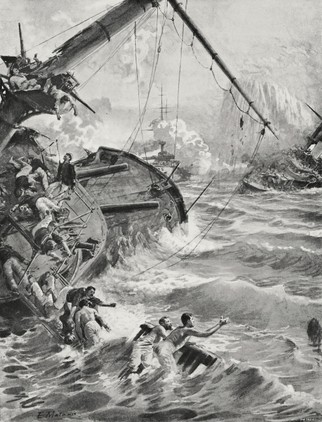
An illustration depicts the sinking of a Russian battleship during the Battle of Tsushima. (Credit: Edward Matania / De Agostini / Getty)

Russia’s overconfident intransigence meant it missed an early window of opportunity whereby diplomacy—backed by a huge army and a respectable navy—could perhaps have secured some territorial concessions. Instead, it embarked upon a bloody contest, accompanied by credible reports of looting, civilian atrocities, and sexual violence. Russian troops proved themselves to be as brutal as feared in the territories they occupied. Russian generals were dismayed by the desultory performance of their troops, many of which lacked discipline and were unmotivated, as evidenced by widespread instances of soldiers disobeying orders. Russian efforts were also hampered by subpar technology, disagreement among commanders, a lack of combined arms coordination, and an inability to replace manpower and equipment losses in battle. Russia eventually pivoted to fighting to save face.


The unpopular and unnecessary war with Japan caused great turmoil within Russia. The economy was in disarray, food shortages were commonplace, and Russia was embarrassed internationally. For his failed war, among other poor decisions, the czar had lost the confidence of his people, sparking protests over economic woes and awful labor conditions (which were exacerbated by the conflict) that peaked on Bloody Sunday, a January 1905 episode in which the Russian Imperial Guard fired on unarmed protesters outside Nicholas’s Winter Palace in St. Petersburg, killing perhaps hundreds of demonstrators; they arrested thousands more. Facing military defeats coupled with domestic pressures, Nicholas finally sued for peace later in 1905. President Theodore Roosevelt presided over the Treaty of Portsmouth, which brought an end to hostilities. But peace with Japan did not bring domestic harmony: The 1905 Russian Revolution, which saw widespread unrest across the Russian empire, sowed the seeds for the 1917 Bolshevik Revolution that overthrew the czar and led to the murder of the Romanov dynasty.

Although the parallels between the Russo-Japanese War and the current invasion of Ukraine are striking, there are also key differences, and fully appreciating these distinctions is necessary to avoid facile conclusions. In 1904, Japan was an empire on the rise and embarking on its own expansionist period, leading to its confrontation with Russia’s hegemonic ambitions in East Asia. The two powers had been engaged in years of negotiations over territory in what is now northeast China and, in a notable similarity to their opening gambit at Pearl Harbor in December 1941, the Japanese in 1904 actually attacked first with a surprise strike on Russia’s naval fleet at anchor in Port Arthur on Manchuria’s Liaodong Peninsula before formally declaring war. And, like at Pearl Harbor, Japan badly damaged the fleet, thereby seizing the military initiative. Unlike the present-day Ukrainians, the Japanese did have a formidable naval fleet to bolster their expansionist agenda, and a loss for Japan would not have been existential for the country.

It is useful to illuminate the present and to confront the future by consulting the past. In this case, an analysis of the consequences of the Russo-Japanese War ought to concern Putin. There are many battlefield parallels between Russian military performance in these two wars, largely based on faulty assessments of the quality of their enemy. Putin’s far larger problem, however, is that throughout Russian history, humiliating military defeats have presaged major social and political upheaval. The Russo-Japanese War is but one example of this phenomenon. Russian failures against Germany in World War I helped usher in the Bolshevik Revolution, and the disastrous Soviet war in Afghanistan gravely weakened the political coherence and credibility of the Soviet Union. To be sure, these wars did not cause all of the social unrest in Russia. In each case, internal dynamics unrelated to the wars were at play, but they interacted with the conflicts in crucial ways. In each case, the military failures exacerbated structural problems and had an accelerating effect on Russian political developments.

After the 1905 revolution, the czar cracked down on dissent while also making nominal concessions, most notably allowing some popular political representation by creating a duma, though this was not a serious power-sharing arrangement. Likewise, there are Potemkin trappings of democratic governance in modern Russia, but no serious checks on Putin’s power. One risk with a personalized autocracy, like the Romanov monarch, is that the state is seen as synonymous with its leader. In the Russo-Japanese War, the Russian military’s rotten performance suggested, by extension, something of how rotten the state had become under the czar. Given how much Putin has personalized his rule in Russia, he now risks the shambles of the war in Ukraine becoming a proxy for his own mismanagement of Russia.
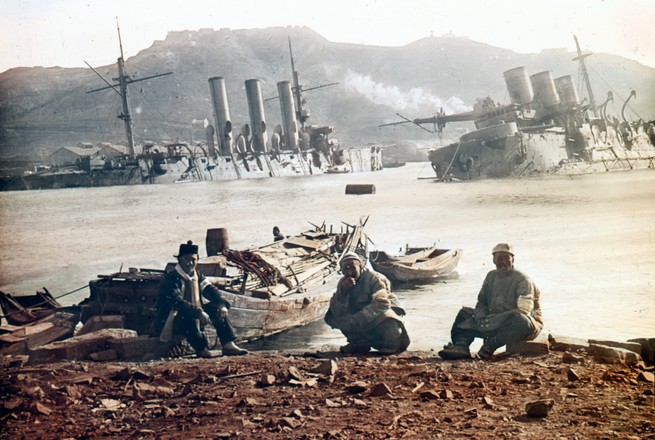
A colorized photo of three Japanese soldiers sitting near the wreckage of a Russian warship in Port Arthur. (Credit: Burton Holmes / Archive Farms / Getty)

History suggests that what domestic dissent Putin may have been able to manage before the invasion of Ukraine will be harder to grapple with in the future. The czar twice enjoyed a brief period of patriotic war fervor before his people turned on him after military defeats. This may inform Putin’s recent crackdowns on dissent, but it misses the benefit of history’s long view. Throughout Russian and Soviet history, social movements for change have often been met with repression and mass arrests, which, in time, have the opposite effect of what autocrats have intended.

The cracks of domestic discontent are already visible in Russia, thanks to Putin’s frequently contradictory lies to his own people. When the Ukrainians sank the Russian naval flagship Moskva, Russian state media falsely claimed that there had been a fire onboard, that the crew of more than 400 sailors had been rescued, and that the ship went down in rough seas under tow. The reality was that 100 Russian sailors, perhaps more, went down with the ship thanks to two strikes from Ukrainian missiles. Many of these sailors were conscripts who Putin claimed would not be fighting in Ukraine in the first place. Their families have now bravely spoken out about their sons’ deaths, demanding information and accountability from a regime that, heretofore, they suffered quietly.

Putin has written often about his views of history. If he were to consider the lessons of the Russo-Japanese War, he would do well to remember the war theorist Carl von Clausewitz’s dictum that war does not take place outside the context of the society that wages it. Indeed, domestic unrest as much as any battlefield setbacks against Japan finally convinced Czar Nicholas II to abandon his military campaign. The present-day families of the estimated many thousands of dead Russian soldiers are unlikely to keep their peace about this senseless slaughter, and perhaps a great many other complaints besides.

Modern-day Ukraine isn’t Japan of the early 20th century, but the similarities between the dire circumstances of each for Russia can illuminate the social and political drivers that history suggests may happen now on an accelerated timeline. In fact, much as the Russo-Japanese War shaped the contours of the 20th-century world, so, too, may Putin’s calamitous invasion of Ukraine drive the forces that define the 21st.

The disaster of the Russo-Japanese War scrubbed the veneer off Imperial Russia, and it confirmed the decay across the empire. That war ended with an emerging country boldly announcing itself on the world’s stage, a loss of prestige and influence for Russia, and eventually the end of the ruler himself.

The defeat also served as an incubator for those seeking revolutionary political change. “The European bourgeoisie has its reasons to be frightened, and the proletariat has its reasons to rejoice,” exclaimed Vladimir Lenin after the fall of Port Arthur. Today, identifying any clear challengers to Putin’s power is difficult. Opposition leaders such as Boris Nemtsov have been murdered or, like Alexey Navalny, poisoned and jailed. Even if a focal point of resistance has not yet emerged, however, Putin’s disastrous war in Ukraine may be the spark for unknown actors in Russia—or in exile—to organize. He should recall that in Russia, after disastrous foreign wars, domestic discontent is never far behind.


Can Russia be considered a superpower?
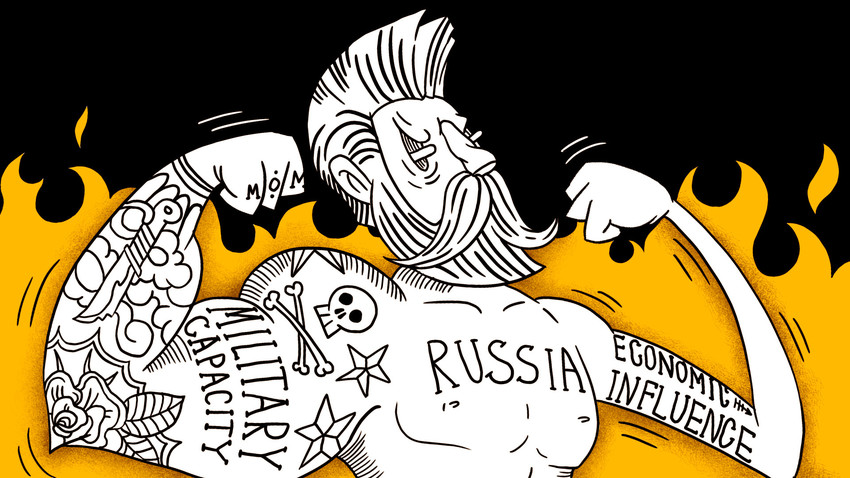


While the military and political capacity of Russia remains undoubted, its economic influence lags behind.Natalya Nosova


Politicians and experts (of sorts) like to play with this loaded term, but many disagree, for instance, Vladimir Putin.


In 2016, Russian President Vladimir Putin called the U.S. the world’s only superpower. “America is a great power, the only remaining superpower, I guess… and we admit that we’re ready to work with the United States,” said Putin during the St. Petersburg Economic Forum. So, we can safely say that Russia isn’t a superpower, right? Let’s look at other opinions.

Some leaders and political scientists, however, still sometimes refer to Russia as a superpower: for instance, in July 2018, Austria’s Chancellor Sebastian Kurz called the summit between Putin and Donald Trump a good sign of “cooperation between two superpowers.” So, who is right?
What is a ‘superpower’?
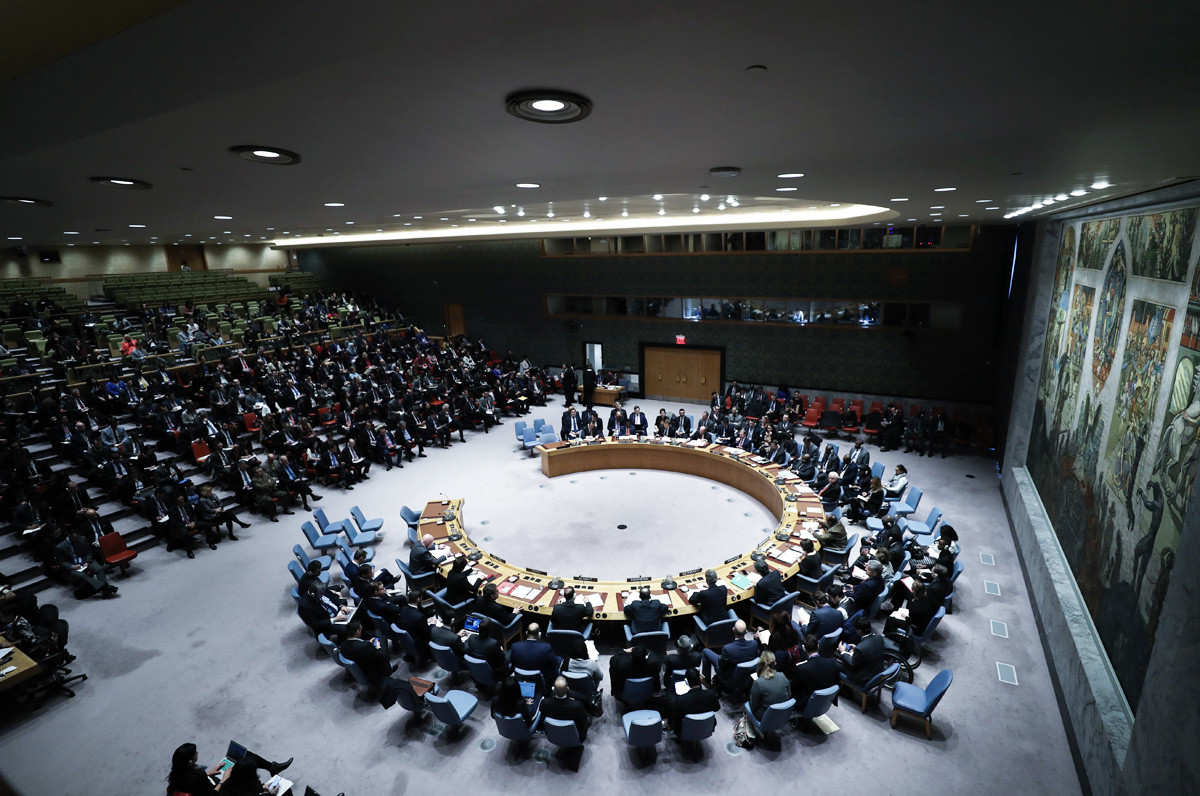


The United Nations Security Council is certainly among places where Russia's words really have much weight.Getty Images

This seems like a good question to start off the whole superpower talk. The definitions differ but most political scientists agree: to be a superpower a country must have lots of military, economic, financial, cultural and ideological influence, and not just among its closest neighbors, but across the world.

“Zbigniew Brzezinski believes there are four factors necessary for a state to be a superpower: military, economic, scientific-technical and cultural,” writes Oleg Matveychev, a political scientist at the Higher School of Economics in Moscow. This makes sense: in order to influence the whole world (and that’s what superpowers do) a state should possess the most modern weapons and have a large economy, but at the same time, it should awe the world with its wonders of culture and science.
Limited opportunities


Does Russia meet these criteria? In some fields Moscow definitely has something “superpower-ish” – for instance, Russia can count on huge military capacity ($47 billion defense budget, full-scale nuclear arsenal and the world’s second most powerful armed forces, according to Business Insider).

Politically, Russia’s weight on the international arena is also impressive: as a permanent member of the UN Security Council it has the right to veto on every major resolution. In addition, the country plays an important role in European affairs and, thanks to its active position in the Syrian conflict, Russia also has much weight in the Middle East. Russia’s economic potential, however, is not as big as that of the U.S. With the world’s 11th largest GDP, it’s certainly an important country, but definitely not a superpower, economy-wise.

The above-mentioned realities limit Russia’s global role. “There’s only one parameter that proves Russia is a global power: defense resources. In other fields, we are not as powerful as we want to be, and this leaves many questions regarding what’s going to be our country’s role in the 21st century,” Alexander Dynkin, president of the Institute of World Economy and International Relations, told Kommersant.
Washington is lonely at the top

This wasn’t always the case: in the second half of the 20th century the USSR challenged the U.S. across the globe, a powerful menace that rivaled America in every field, be it military matters, politics, economic influence and culture.
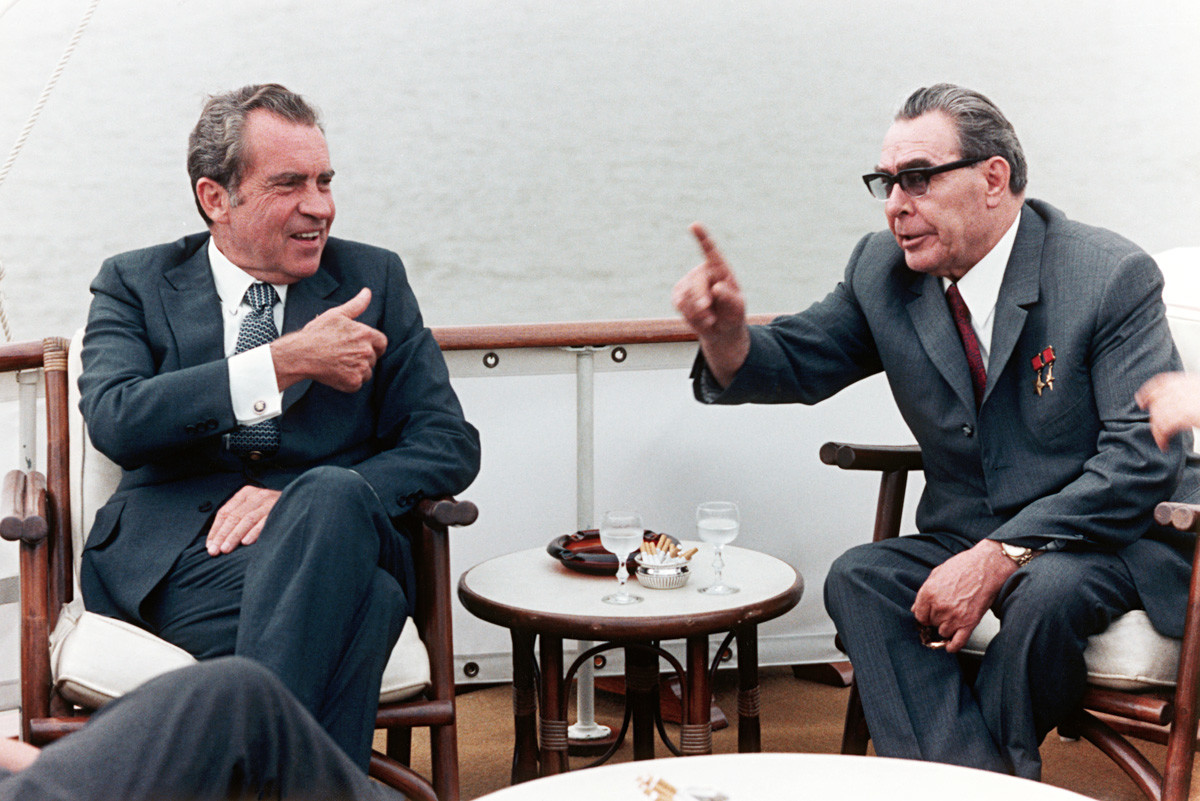


Richard Nixon and Leonid Brezhnev.Getty Images

“After two devastating world wars, the global community found itself in a stable and very abnormal, in terms of history, shape. Two states dominated the world, incomparable to any others in its power,” said Fedor Lukyanov, editor-in-chief of the magazine, Russia in Global Affairs, in an interview. This bipolar world order defined the Cold War period.

“That’s when the term ‘superpower’ was coined, to distinguish those gigantic powers from the so-called ‘great powers” of the 19th century,’ Lukyanov added. Those included the UK, France, Germany, Russia and so on. But in the second half of the 20th century, there were only two superpowers. After the Cold war ended, one of the superpowers – the USSR – ceased to exist, and though Russia inherited some of its assets (nuclear status and a position on the UN Security Council), “its influence remained large but it was no longer unique,” the expert said.

Vladimir Putin seems to be right: while Russia is one of the major players in the international arena, it is not a superpower like the U.S. Can the latter remain the most powerful country on Earth, or will it eventually lose its crown, like what happened with the USSR? Only time can tell, but one thing is for sure - no one stays at the top forever.


Friday, July 1, 2022


Will Nato go to war with Russia? How many troops it’s sending as a deterrent and what it means for Ukraine


The plan being discussed at this Madrid summit ‘constitutes the biggest overhaul of our collective deterrence and defence since the Cold War’, according to secretary general Jens Stoltenberg


Fighter jets over northern Norway during an exercise with Norwegian, Finnish, French, and German aircraft on June 2.Royal Norwegian Air Force

Sweden and Finland applied to join NATO in May, and the alliance is moving quickly to admit them.


The two countries already have a close relationship with the military alliance.


NATO leaders see the two countries as bringing immediate benefit — especially their fighter jets.

As Finland's and Sweden's accession to NATO moves ahead quickly, the alliance's already tight partnership with the Nordic countries was on display in the skies over Northern Europe in early June.

On June 2, the Swedish and Finnish air forces drilled with their British, French, German, Norwegian, and Belgian counterparts along Norway's western coast.

Some 45 aircraft participated in the exercise, which was meant to demonstrate the ability to conduct complex air operations over long distances.

A German Eurofighter Typhoon refueling from a US KC-135 over the Baltic Sea during BaltOps 22 on June 9.US Air Force/Senior Airman Nicholas Swift

The chief of the Norwegian air force said it was "the first time we are conducting such an advanced exercise with NATO and partner nations, which also includes Sweden and Finland."

From June 5 to June 17, Finnish and Swedish forces joined the militaries of 14 NATO members, including the US, for Baltic Operations 2022. The 51st iteration of the maritime-focused exercise involved more than 45 ships, more than 75 aircraft, and 7,500 personnel.

During one drill, a US Air Force KC-135 tanker refueled US, Finnish, Swedish, and German jets, allowing them to keep operating over the Baltic.
Scandinavian skies

A Finnish F/A-18 Hornet and three Swedish JAS 39 Gripens.Finnish Air Force

The June exercises demonstrated not only the strong relationship Finland and Sweden have with their NATO neighbors but also their own considerable military capabilities, which are poised to significantly strengthen NATO's air component and deterrence in the north.

Finland operates a fleet of 55 McDonnell Douglas F/A-18C Hornets, which it acquired in the 1990s. Despite its age, the single-seat F/A-18C is capable aircraft and can quickly switch between fighter and attack configurations. It is also operated by the US Navy and Marine Corps and numerous US allies, and it has seen combat in North Africa, the Middle East, and the Balkans.

Finland's Ministry of Defense has said its Hornets will be decommissioned by 2030, making way for the 64 F-35As that Helsinki ordered in December in the country's biggest military procurement on record. Its first F-35 is scheduled for delivery by 2026.

Finland's government in December authorized the purchase of the F-35 to be its next multirole fighter.Finnish Air Force

The fifth-generation F-35A is increasingly popular among US allies. The stealth jet can act as a fighter or attack platform and use its intelligence, surveillance, and reconnaissance capabilities to enhance the effectiveness of friendly air and ground forces.

Sweden's only fighter jet is the Saab JAS 39 Gripen, a domestically designed and built aircraft that is less advanced but highly effective.

"The Gripen doesn't have the stealth of an F-35 or the brain-mashing performance of an F-15, but it's a reliable and cost-effective aircraft that brings a number of important capabilities into the fight," the aviation analyst and Sandboxx editor in chief Alex Hollings told Insider.

The Gripen is also versatile. Its small size allows it to "take off and land on austere airstrips or even highways while carrying extremely effective air-to-air weapons" like the Meteor and AMRAAM missiles, Hollings said.

The Swedish jet is one of the few fighters in service that can supercruise, maintaining supersonic speeds without dumping fuel into its afterburner. That increases an aircraft's endurance at supersonic speeds by lowering its fuel consumption, allowing it to fly faster and carry less fuel.

A Swedish Air Force Saab JAS 39 Gripen over England in 2019.US Air Force/Tech Sgt. Aaron Thomasson

The US-made F-22, the French-built Dassault Rafale, and the multinational Eurofighter Typhoon are the only other jets that can supercruise. None of Russia's jets have the capability.

The Gripen program has had controversy, Hollings said, referring to allegations of fraud in some of its foreign sales, but it was designed to be "easy to fly, inexpensive to maintain, and quick to adopt upgrades and that all makes for a handy jet to have around in a fight," he added.

Though it has never seen combat, the Swedish jet has proved its worth in exercises. Notably, during the first day of a major US-led exercise in Alaska in 2016, it scored 10 kills against peer aircraft, including a 4.5-generation Eurofighter Typhoon, without suffering a casualty.

Sweden's air force operates 71 Gripen Cs and has ordered 70 Gripen Es, an upgrade over the C model, to be delivered by 2027.
Building the best team

A US ‪‎B-52‬ with two Polish ‪F-16s, two German ‪‎Eurofighter‬ ‎Typhoons, four US F-16s, and four ‪‎Swedish‬ ‎Gripens over the Baltic Sea in 2016.US Air Force

Despite their capabilities, integrating two air forces with a combined fighter fleet of 126 aircraft into NATO operations won't be simple.

Though both the F/A-18C and the Gripen are used by other NATO members, tactical integration is achieved through frequent joint exercises, like the ones conducted in June.

"There are always challenges inherent to mixing national air forces and the platforms they operate," Hollings told Insider. "Once you work through interoperability (in terms of both technology and tactics), a mix of aircraft becomes a potent tool in a large-scale fight."

Increasing the variety of aircraft in NATO will give the alliance a tactical advantage.

Jets refueling from a German air-force tanker during a Norwegian-led exercise with Finnish, French, and German aircraft on June 2.Royal Norwegian Air Force

"Fighters operate a bit like cage fighters, in that pilots want to play to the strengths of their own aircraft and the weaknesses of the opponent's," Hollings said. "When you head into a fight with a variety of fighters at your disposal, each playing to their respective strengths, you really complicate the combat calculus for your opponent."

F-35As and Gripen Es are set to make Finland's and Sweden's air forces more capable, but even without those advanced jets, NATO leaders are eager to have Finnish and Swedish forces in the alliance.

Gen. Christopher Cavoli, who is set to take over as head of US European Command and as supreme allied commander Europe in July, said during his nomination hearing in May that the Finnish and Swedish militaries would bring "quite a bit of capability and capacity to the alliance from day one."

He added that he looked "forward to the accession of Finland and Sweden to the alliance from a military perspective."


Troops attend a ceremony of the Nato-enhanced forward presence battle group in Latvia, the numbers of which could be increased under new plans (Photo: Ints Kalnins/Reuters)


Nato has announced its intention to expand its high-readiness forces from 40,000 troops to more than 300,000 in response to Russia’s ongoing war with Ukraine.

The plan being discussed at this week’s Madrid summit “constitutes the biggest overhaul of our collective deterrence and defence since the Cold War”, according to secretary general Jens Stoltenberg.

Russia’s February invasion has sparked a geopolitical shift, prompting once neutral countries Finland and Sweden to apply to join Nato and Ukraine to secure the status of candidate to join the European Union.
Will Nato go to war with Russia?

Nato uses a system of collective security, whereby its independent member states agree to mutual defence in response to an attack by any external party.

Ukraine is not a part of Nato, so the Western response to Russia’s invasion has so far focused on sanctions and the provision of military resources.

If Russia’s President, Vladimir Putin, decides to extend his attacks beyond Russia and into a neighbouring Nato state, such as Latvia, Lithuania or Estonia, then Nato members would collectively enter the conflict directly.


Jens Stoltenberg said Nato in future would have “well over 300,000” troops on high alert, compared to 40,000 troops that currently make up the alliance’s existing quick reaction force, the Nato Response Force (NRF).

The new force model is meant to replace the NRF and “provide a larger pool of high readiness forces across domains, land, sea, air and cyber, which will be pre-assigned to specific plans for the defence of allies,” a Nato official said.


From intelligence-gathering to training civilians in guerrilla tactics, here’s what the U.S. and NATO might do to push back against the Russian invasion while avoiding escalation.


Biden has already declared that neither U.S. nor NATO military forces will be deployed to the conflict sparked by Russian forces pouring across Ukraine’s borders. The dangers of escalation are simply too great, especially given the threats that volatile Russian President Vladimir Putin has made regarding the use of nuclear weapons. Direct involvement, the thinking goes, is just too risky.

But that doesn’t mean the U.S. won’t be indirectly involved. From gathering intelligence on the ground to training potential civilian partisans in guerrilla warfare, it’s extremely likely the U.S. and NATO will seek to influence events on the battlefield. Here’s how that might work.

According to former U.S. Army Ranger Tom Amenta, there are advantages to having on-site, operational intelligence gathering in Ukraine that can’t be equaled by remote technologies like satellite imagery or radio signal interceptions.


A Ukrainian serviceman gives a thumb up before an attack in Lugansk region on Feb. 26, 2022, the day Russia ordered its troops to advance in Ukraine “from all directions.”


“The value of boots on the ground [in intelligence] is that you get a ‘finger tip feel’ of what is going on,” said Amenta, co-author of the book The Twenty-Year War, in an interview with The Daily Beast. Such intel gives U.S. military observers “a feel of the people and of the battle space and allows for the ability to gauge the situation, almost in real time, and see what is going on with the Russians and Ukrainians to assist commanders in planning.”


Amenta’s co-author, Dan Blakely, another former Ranger, agreed that having local operators for sourcing information would be invaluable in the Ukraine conflict.

“Not only do you get the real-time HUMINT (human intelligence) of what the Russians are doing, but you can have a real pulse of the continued capabilities of the Ukraine military [and] learn the weaknesses and capabilities of our enemies,” including “what weapons, vehicles, aircraft, tactics, and troop units they are using.”

Blakely added that such intel was vital for developing “future strategic plans should the U.S. and NATO allies get involved.”

When it comes to gathering HUMINT, one option for elite U.S. forces is the use of Special Operation Groups (SOGs). Amenta described the typical SOG as a small, covert, reconnaissance task force, often made up of intelligence agents from the NSA or CIA, paired with Special Forces soldiers like Green Berets or Delta Force commandos. In order to avoid detection, the SOGs are able to work undercover within local populations.


“They’ve essentially mobilized the entire nation.”

“These men and women are extremely skilled in blending into environments, gathering intelligence and also being able to work with and help guide [and] assist local military forces,” Amenta said.

Because secrecy is of paramount importance, SOGs working in Ukraine would likely be limited to just a few officers in each unit. But Amenta framed it as an issue of quality over quantity, saying that the “training, raw intelligence, and ability to rapidly ideate and think strategically is what wins the day here.”

But not everyone is in favor of using SOGs in Ukraine.

Dr. Robert J. Bunker, the research director at the security consultancy ℅ Futures LLC, said the risk that an SOG team or a NATO equivalent could be killed or captured, and linked back to their countries of origin, means that the risk far outweighs the reward.

Putting U.S. intelligence gatherers on the ground in any capacity is just not a “viable option,” Bunker said. “In my opinion it is too escalatory given the fact that both the Putin regime and the U.S. are nuclear armed powers… We simply do not want NATO or U.S. forces and Russian forces getting into direct contact with one another.”

Lieutenant Colonel (retired) Hal Kempfer, who served as a U.S. Marine Corps Intelligence Officer, said that it’s “very possible” that the U.S. has spies on the ground in Ukraine. But Kempfer also said a safer option to avoid escalation would be to utilize Ukrainian nationals to gather vital HUMINT information and pass it on to their counterparts in the U.S. and NATO.


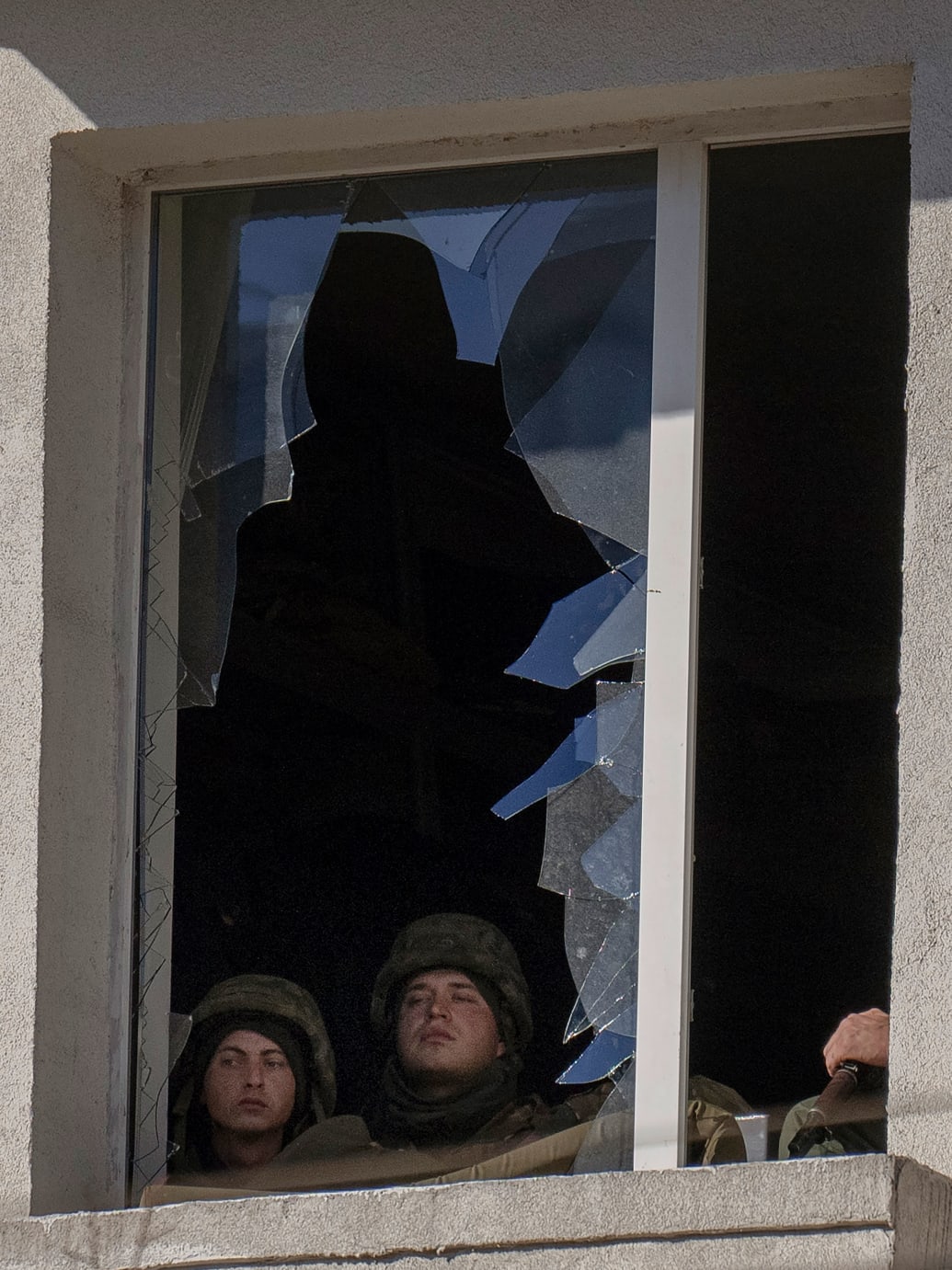
Ukrainian soldiers look out from a broken window inside a military facility, after an explosion in Kyiv, Ukraine, Feb. 26, 2022.

Emilio Morenatti

“We don’t really need to have [U.S. or NATO spies on the ground] because we can deal directly with Ukraine forces, many of whom we’ve trained, and trained to a standard where they can provide tremendous intelligence capability,” Kempfer said.

“They’ve essentially mobilized the entire nation. You have federal law enforcement [mobilized]. They’re really good at observing and reporting. And good at avoiding detection while they do that. So a lot of them might be wearing civilian clothes and collecting intelligence,” he added.

Even if U.S. special forces did not enter Ukrainian territory, that does not mean they won’t be playing a vital role. One of their most important functions might well be training Ukrainian soldiers or ordinary citizens in the tactics of guerrilla warfare they would need to resist the occupation of their homeland. Just such tactics were employed by Mujahideen fighters during the Soviet-Afghan war of the late 20th century—tactics that eventually forced the Soviets to withdraw.

On Friday, the BBC reported that at least 18,000 assault rifles had been handed out to the citizens of Kyiv, and the international community is rife with speculation that the conflict could devolve into a prolonged anti-Russian insurgency.

That’s partly because Ukraine is almost the size of Texas, with a population of about 43 million people. About 70 percent of the population is concentrated in urban areas, meaning that: “We could be looking at house-to-house fighting in which tens of thousands of armed defenders face the invading forces,” said research director Bunker.

In the event that the major cities were pacified by the Russian forces, an occupation phase would then begin during which “Ukrainian civilians and the relatives of the insurgent fighters” would be targeted, Bunker said. “Along with the brutality of such an occupation this would begin to strain the Russian economy to logistically support the deployed force.”

Former Ranger Amenta agreed with Bunker that Russian forces could get bogged down in a potential quagmire. “Once you take the territory you are no longer the aggressor. [Then] you are in static positions that restrict your freedom of movement, and you’re an easier target,” Amenta said. “And 200,000 Russian soldiers against 43 million people who don’t like you—that’s a really hard thing to accomplish.”

In the event of a prolonged insurgency that might turn into a war of attrition, the U.S. and NATO would likely see it in their own interests to provide training and munitions to partisan fighters, in similar fashion to what the U.S. did in Europe during the Nazi occupation.


“It’s all fun and games until someone throws a nuke.”

When asked, a senior U.S. defense official told The Daily Beast that the U.S. would not rule out training Ukrainians. “We’re going to continue to look for ways to support the Ukrainian armed forces, and to help them defend their country,” they said.

Former Marine Colonel Kempfer, who cited similar efforts conducted by the U.S. in Iraq and Afghanistan, described training host-nation personnel as “a traditional Army Special Forces mission.” Amenta agreed, calling such training the Special Forces’ “bread and butter.”

“They’d be teaching [Ukrainian partisans] how to use things like Stinger anti-air missiles and javelin anti-tank weapons to slow down Russian tanks and helicopters. They’ll also teach ambush and guerrilla warfare techniques, especially things that can destabilize or slow down the Russian movement, and, if they were attempting to hold territory, to make it very difficult for them to keep it.”

One major question might be where would such training take place. If U.S. forces are barred from entering an occupied Ukraine, nearby NATO allies like Poland and Romania would seem like potential candidates. American troops arrived in both of those nations this week to help them defend against potential Russian incursions, meaning that the personnel needed for setting up guerrilla warfare schools may already be in place.


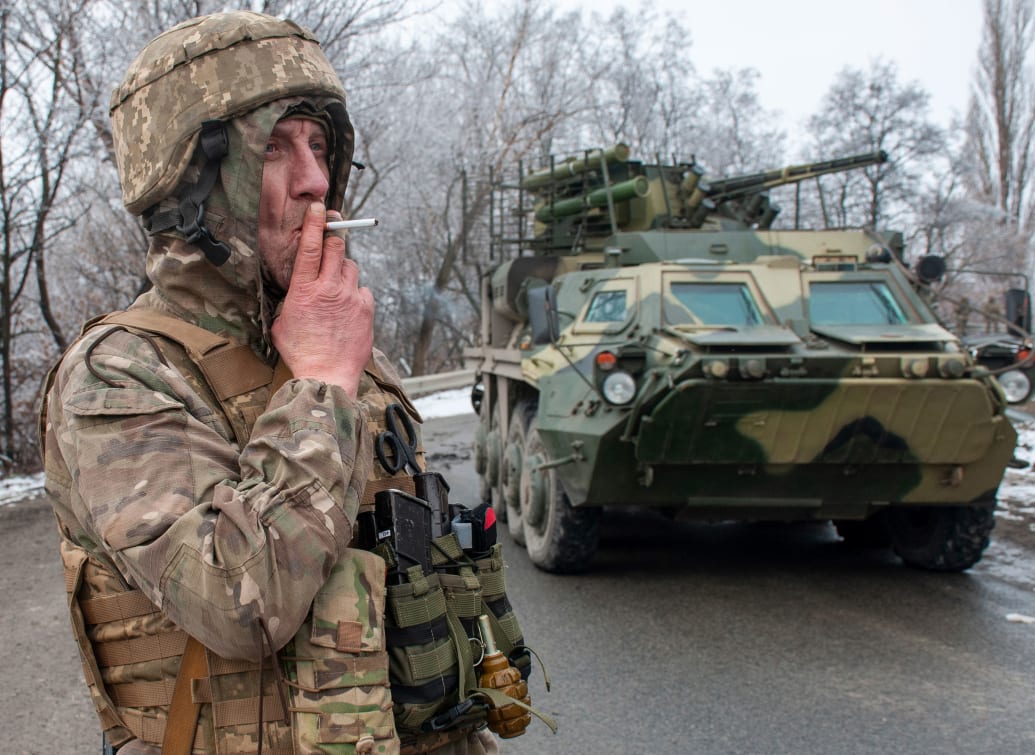
A Ukrainian soldier smokes a cigarette outside Kharkiv, Ukraine, Feb. 26, 2022.

AP Photo/Andrew Marienko

The trouble with basing training camps in NATO countries, said Kempfer, is that the Kremlin might see that as aggressive interference within its sphere of influence.

“If you train partisans in Romania or Poland and then they return to Ukraine [to engage Russian forces]—how would Putin view that? You have to look at the political volatility of that.”

Kempfer also pointed to Putin's KGB background and his penchant for being ruthlessly vindictive against any perceived threat.

“This is someone who used a nerve agent to assassinate dissidents on British soil… My concern would be that if we brought [the partisans] to a NATO country Putin could take some sort of overt military action against that NATO country and that would cause a massive escalation. The other concern is that he would use covert means against that country to destabilize the situation in and around where we’re doing the training. That’s very much in his kit bag.”

Kempfer said that one solution might be the use of virtual or online training. “From an operational risk perspective, that’s the safest thing we can do,” he said.

Kempfer also discussed the possibility that many members of the Ukrainian diaspora in the U.S. and Western Europe might see themselves as beholden to return to their homeland to take up arms.

“I fully believe that’s going to happen,” Kempfer said, and also mentioned that such an influx of voluntary foreign fighters could provoke Putin into unfairly claiming deliberate interference by the U.S. or NATO.

“There’s reality and then there’s whatever Russia wants to say,” Kempfer said. “It’s all fun and games until someone throws a nuke.”
There is a lot of talk in the West about Russian President Vladimir Putin being mentally unhinged. How could he not have known that his invasion of Ukraine would have serious consequences for his country? Or is he so obsessed with maintaining an image of greatness—especially ahead of Russia’s upcoming 2024 presidential elections—that he doesn’t care?


Either way, Putin risks losing the confidence of his people, whose economic suffering will increase as the conflict continues.

Desperate Russians Race to Withdraw Cash as Sanctions Send Currency Into Free-FallPerhaps the question of Putin’s sanity is beside the point, because there is little the West can do about it. Although both Hitler and Stalin were crazy by any psychiatric standard, they were still able to inflict horrific damage and death on millions of people. But Hitler did not have nuclear weapons, and Stalin’s hydrogen bomb was still being tested when he died. Putin’s nuclear arsenal, on the other hand, could destroy parts of the West in minutes.

In a nationally televised address last Thursday, Putin offered a menacing warning of Russia’s nuclear capability: “No matter who tries to stand in our way or all the more so create threats for our country and our people, they must know that Russia will respond immediately, and the consequences will be such as you have never seen in your entire history.” On Sunday, Putin went even further by announcing that Russia’s nuclear forces have been put on high alert, an order that NATO Secretary General Jens Stoltenberg called “dangerous rhetoric” and “irresponsible behavior,” which “adds to the seriousness of the situation.”


The more casualties Russia suffers, the more unpopular the war in Ukraine will become back home.


The only other time that the Kremlin’s nuclear threat reached this height was during the Cuban missile crisis in 1962. But Khrushchev—though volatile and impulsive—was apparently a rational actor, not consumed by the historical grudges and the need to show off his masculine credentials that seem to obsess Putin. Khrushchev also had to consider the views of fellow Politburo members. Although Putin purports to consult with advisers, he seems to make key decisions on his own. Russian Defense Minister Sergei Shoigu and Chief of the General Staff of the Russian Military Valery Gerasimov looked uncomfortable as they sat with Putin when he made Sunday’s announcement, but if they had reservations, they were ignored.

If Putin is indeed so detached from reality in the pursuit of his reckless confrontation with the West, what are his motivations?

First of all, like any dictator, Putin does not feel confident of his hold on power. He knows that he was not democratically elected to the presidency in 2018, or even in 2012, because serious contenders were barred from participating. Using his powerful security services, Putin has suppressed the media and arrested democratic oppositionists, including Alexei Navalny, who has been in jail for over a year after being poisoned. Ultimately, the Russian leader cannot be sure what his people really think of him.

Putin’s approval ratings were around 65 percent at the end of 2021, which may seem impressive by Western standards, but Russians are conditioned to say they approve of their leader when there is no alternative. Adding to that, as Putin knows, the continued decline in incomes and living standards is a potential trigger for serious dissatisfaction with his leadership.

Because of this insecurity, Putin hates having democratic states on his country’s border, especially Ukraine. He doesn’t want his people to get ideas. All Putin’s talk about the West destroying Russian values and NATO threatening Russia with nuclear weapons camouflages his intense fear of democratic aspirations in his own country.

Putin admitted as much on Thursday: “Of course, the question is not about NATO itself. It merely serves as a tool of U.S. foreign policy. The problem is that in territories adjacent to Russia, which I have to note is our historical land, a hostile ‘anti-Russia’ is taking shape.” And later: “Russia cannot feel safe, develop, and exist while facing a permanent threat from the territory of today’s Ukraine.”

Putin is all the more alarmed about NATO support for states along Russia’s border because of his growing concerns over how much longer he is going to stay in power. Although the Russian presidential election is two years away, there is reportedly considerable disquiet in the Kremlin about what will happen in 2024. Putin himself said last October that he would not say what his plans are because “it would make the [political] situation unstable.”


Protesters in cities across Russia have come out to show the Kremlin how little respect they have for this war.


Leadership succession in countries where the autocratic leader and his cronies have amassed great wealth at the expense of their people, as in Russia’s case, is fraught with danger. Once out of power, they could be called to account by the new government, and ensuring that a designated successor will protect their interests can be problematic, especially if members of the elite know one another’s secrets and there is infighting. Accusations of corruption are potent political weapons in Russia.

Putin needs to be in a strong position, with high support from Russians, when he decides what happens in 2024. Either he runs again or his loyal, hand-picked successor does, and he can retire happily to his sumptuous palace in Gelendzhik. He is staking his claim on Russia’s future by invading Ukraine and demonstrating to his patriotic citizenry that he can stand up to NATO.

Putin may have been inspired by memories of the Chechen war, which catapulted him to the presidency in 2000. He was a virtual unknown when Yeltsin appointed him prime minister—and his designated successor—in August 1999. As with Ukraine today, Putin used a false flag as an excuse to invade Chechnya, claiming that Chechen terrorists were responsible for September 1999 bombings in Russia. As a result of his determined pursuit of the ruthless Chechen war, Putin’s approval ratings skyrocketed.

Significantly, in Thursday’s address, Putin mentioned this war and brought up the old, false accusation that the West had actively supported the terrorists there. Putin’s goal in Ukraine is the same as it was in Chechnya—installing a Kremlin-sponsored regime to take the place of one that won’t march to Moscow’s tune. He also hopes that his bold aggression will bring him the affirmation at home that he got with the Chechen war.

But all is not going according to Putin’s plan, with Ukrainian resistance stronger than expected and Western sanctions crippling. This is probably why Putin resorted to the insanity of his nuclear threat.


If Putin seems both narcissistic and deranged to the West, his own people may be getting the same impression, especially now that he has started talking about using nukes. And feelings of patriotism can only go so far when pocketbooks are empty. As political commentator Anton Orekh noted: “The effect of the current patriotic enthusiasm will be even shorter than after the Crimea. The economic situation is getting worse, so after some time even a victory over the Kyiv junta and the Anglo-Saxons will arouse people less than prices in stores and half-empty shelves.”

Unlike those who lived under Stalin and Hitler, Russian people today do not face death if they protest on the street, though they can be thrown into jail, as we have seen with the thousands of arrests in the past few days. Nor would Putin’s subordinates be shot if they refused to go along with Putin’s further acts of aggression. So, hopefully, Russians themselves will take action and stop their leader before “the consequences we have never seen in our entire history” are allowed to occur.