TRAVEL

TRAVEL

Tuesday, March 19, 2019


Mystery glowing ball streaks through skies above Russia: Footage of unidentified object was captured close to site of the most powerful meteor explosion in recent history that landed with the force of 185 Hiroshima bombs

  • A mysterious 'UFO' was observed firing across the sky in remote central Russia 
  • The bright light looked like it was headed for a collision with the Earth's surface 
  • It was observed a few hundred miles from a famous explosion site 111 years ago  
  • No crash has been reported and no debris has been retrieved from any landing
A mystery glowing ball was spotted streaking across the Russian night sky close to the site of the largest meteor explosion in modern history.  
A dashcam captured a dazzling flash changing colour from green to yellow to orange in a remote area of Krasnoyarsk region in Siberia.
It was spotted near the impact site of the Tunguska meteor that struck the region with the force of 185 Hiroshima bombs in 1908. 

See 

Moment mysterious glowing 'UFO' streaks through Russian sky
Loaded: 0%
Progress: 0%
-:-
Previous
Play
Skip
Unmute
Fullscreen
Advertisement
A dashcam captured a dazzling flash changing colour from green to yellow to orange in a remote area of Krasnoyarsk region in Russia. One theory is that the spectacular luminous UFO streaking over the Siberian hills was caused by a meteor yet so far there is no evidence for it
Pyotr Bondarev, from Tura village where the flash was seen, said: 'The night got bright and warm, as if a giant light bulb was switched on in the sky'.
Experts believe the object seen streaking over the Siberian hills was also a meteor but no conclusive evidence has been found so far.
The shining body was also seen as far as 250miles (402km) away, but appeared less, bright.
Witnesses say it appeared to be heading for a crash landing.
No debris from a meteorite has been found so far and experts are keeping an open mind as to what caused the stunning spectacle. 

The latest sighting lies several hundred miles from the site of the monumental Tunguska Event 111 years ago which caused devastation in the region
Mr Bondarev added: 'It was about 7.30pm, it was dark. I was outside having a walk with my wife and children, when the sky flashed green and yellow.
'Many people saw it and got very excited.'
Another local source said: 'It's impossible to tell what the shining object was. It might have been a meteor or something else.'
Krasnoyarsk Kirensky Physics University researcher Sergey Karpov said it was likely a small meteorite.
'Most likely it was something up to 10 centimetres [4inches] in diameter',' he said.
But this has not been confirmed by the Russian emergencies ministry.
There has been no suggestion that a stray missile or debris from a space launch was behind the 'UFO' sighting. 

One theory is that the spectacular luminous UFO streaking over the Siberian hills was caused by a meteor yet so far there is no conclusive evidence that anything has landed nearby
One theory is that the spectacular luminous UFO streaking over the Siberian hills was caused by a meteor yet so far there is no conclusive evidence that anything has landed nearby 
The Tunguska explosion is thought to have been produced by a comet or asteroid hurtling through Earth's atmosphere at over 33,500 miles per hour (50, 000km/h), resulting in an explosion equal to 185 Hiroshima bombs as pressure and heat rapidly increased
Some have claimed it was a 'second Tunguska', as the site of the explosion 111 years ago which caused devastation across the region is within a few hundred miles.
More than 770 square miles (2,000 sq km) of forest was wiped out after a fireball - believed to be some 330ft (100m) wide - tore through the atmosphere and exploded in 1908, according to scientists.
An estimated 80million trees were destroyed and thousands of charred reindeer carcasses were left behind.
It is believed to have exploded three to seven miles (5 to 12km) above the earth's surface yet despite the carnage there was no impact crater.
There were no reports of casualties in the sparsely populated area, despite the power of the impact.
However, some experts have disputed the cause of 1908 Tunguska explosion. 

The remote Tura village where the bright light was observed streaking over the Siberian hills in Russia. Tura is a mere few hundred miles from an infamous explosion caused by a meteorite landing over a century ago in the remote forests of Russia that caused devastation

The remote Tura village where the bright light was observed streaking over the Siberian hills in Russia. Tura is a mere few hundred miles from an infamous explosion caused by a meteorite landing over a century ago in the remote forests of Russia that caused devastation 
No debris from a meteorite - a meteor that strikes the ground - has been found so far and experts are keeping an open mind as to what caused the stunning spectacle

WHAT WAS THE CHELYABINSK METEOR STRIKE?

A meteor that blazed across southern Ural Mountain range in February 2013 was the largest recorded meteor strike in more than a century, after the Tunguska event of 1908.
More than 1,600 people were injured by the shock wave from the explosion, estimated to be as strong as 20 Hiroshima atomic bombs, as it landed near the city of Chelyabinsk.
The fireball measuring 18 meters across, screamed into Earth's atmosphere at 41,600 mph. 
Much of the meteor landed in a local lake called Chebarkul.
Other than the latest find, scientists have already uncovered more than 12 pieces from Lake Chebarkul since the February 15 incident. However, only five of them turned out being real.

What did they find in the meteorites?

Analysis of recovered Chelyabinsk meteorites revealed an unusual form of jadeite entombed inside glassy materials known as shock veins, which form after rock crashes, melts and re-solidifies.
By calculating the rate at which the jadeite must have solidified, the team were able to determine that the asteroid formed after a collision.
Jadeite, which is one of the minerals in the gemstone jade, forms only under extreme pressure and high temperature.
The form of jadeite found in the Chelyabinsk meteorites indicates that the asteroid's parent body hit another asteroid that was at least 150 metres (490ft) in diameter.

Wednesday, March 13, 2019

Fit the Iowa-Class Battleships with Nuclear Propulsion, High capacity Lasers and Missles


Fit the Iowa-Class Battleships with Nuclear Propulsion, High capacity Lasers and Missiles

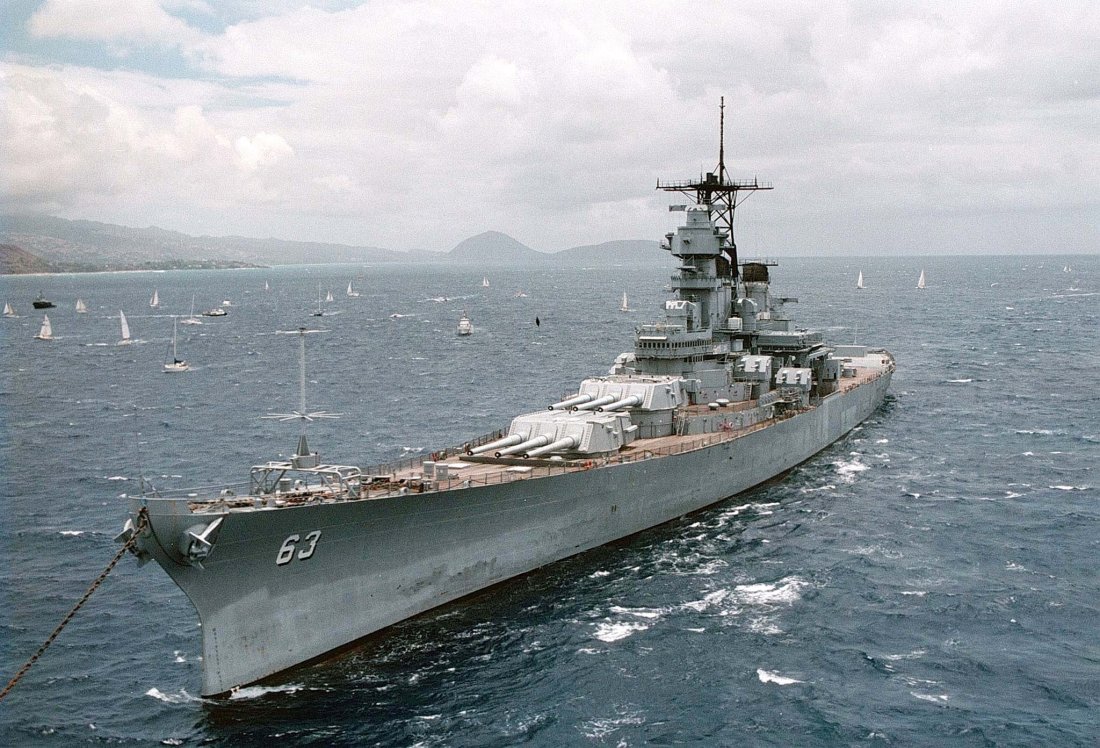
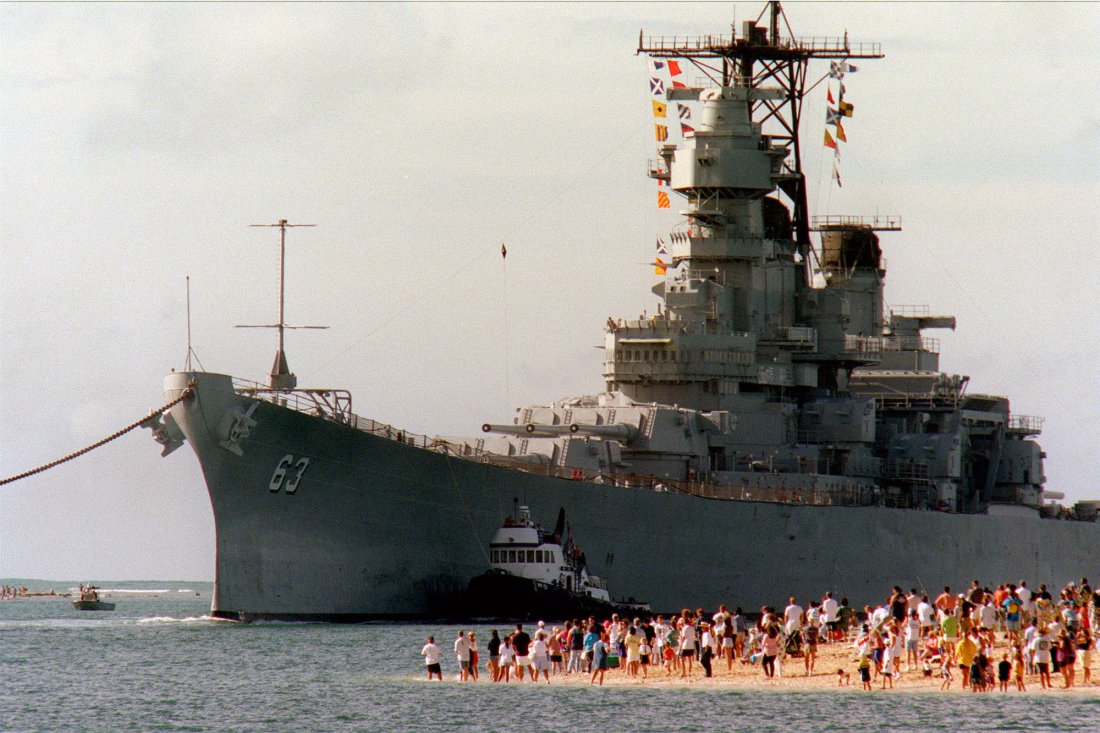
The U.S. Navy will never again be a dreadnought fleet of big-gun battleships. But it is time to reexamine the role of armor in naval architecture. Even the most forward-leaning offensive operation needs a few tough linesmen who can take a beating and stay in the game. Deployment of these armored ships will deter China or North Korea and Russia in the Western Pacific and the Arctic Circle to disallow passage on international waters as they claim as their own territory. Also Battleships convey the projection of power and captivate the imagination. Before they were displaced by aircraft carriers, battleships were symbols of great-power status. Some of the most iconic were the American Iowa class, the last battleships ever built by the United States. Powerful in appearance, yet with sleek lines filled in with haze gray, the Iowa class served in World War II and were unretired three more times to serve as the U.S. Navy’s big guns.

The National Defense Authorization Act for 1996, generally known as the defense budget, had a unique provision hidden inside the text: the text directed the Navy to keep at least of the four Iowa-class ships on the Naval Register in good condition, retain the logistical support to maintain battleships on active duty and keep those ships on the Register until the secretary of the navy certified that existing naval gunfire support equaled or exceeded the firepower of two battleships. Iowa and Wisconsin were finally stricken from the Register in 2006 after the secretary of the navy, citing the upcoming thirty-two Zumwalt-class destroyers, certified they were no longer needed.

Now, eleven years later, the Navy is only getting three of the thirty-two Zumwalt destroyers, and the long-range attack projectile specifically designed for the Zumwalt’s two 155-millimeter guns is being cancelled due to exorbitant costs. The Navy is again facing a naval gunfire shortfall, in addition to an antiship shortfall. Could the Iowas make yet another comeback, bolstered with new and powerful weapons?

In laying the groundwork for battleship modernizations, there four things that must happen for any successful update. The Iowa-class battleships were designed in the late 1930s, and a lot has happened in the last eighty years. First, the ships must be highly automated. The ships originally sailed with crews of up to 2,700 personnel, later reduced to 1,800. The U.S. Navy is no longer a draftee service, and personnel costs in the all-volunteer Navy are major expenses. Prime candidates for automation are older mechanical systems, such as the three sixteen-inch gun turrets, each of which has a crew of over a hundred, and the power plant and engineering.


Share on Facebook
Second, the battleships would return to the field just as firepower is transitioning from being gunpowder-based to electricity-based. The ship will need all the power it can get to power the new generation of weapons systems that will go onboard. A nuclear power plant would provide power in the megawatts range, while requiring fewer crew to operate it. An alternative is the electric drive system that powers the Zumwalt class, albeit on a larger scale, delivering even greater power.


Third, the battleships need to be able to sink ships at ranges of at least two hundred miles and hit land targets at eight hundred to a thousand miles. At 887 feet long, the battlewagons will be prime targets for land- and sea-based antiship missiles and must have a reasonable chance of operating from beyond their ranges. While the effective range of antiship missiles will only continue to grow, a long-distance striking capability will still be useful against other targets, including island garrisons, air bases and enemy ships.

Fourth, the battleships will be purely offensive weapons designed to attack targets on land and at sea. They will not have advanced radar systems aboard, nor will they equip the Standard family of missiles, nor will they jump on the ballistic-missile defense bandwagon. In order to justify their existence, they must be able to contribute as much offensive firepower as possible.


A reactivated battleship would not replace a carrier—the two would operate separately but symbiotically. A guided-missile battleship’s long-range firepower would suppress enemy air defenses, allowing carrier aircraft a freer hand over enemy territory. In return, carriers would provide antisubmarine and antiair cover for the battleship.


Our upgrade for the Iowa-class battleships would turn them from battleships (BBs) to guided missile battleships (BBGs). We’ll start by funding development of a sixteen-inch hypervelocity guided projectile along the lines of the HVP round currently being developed by BAE Systems . That round, for the 127-millimeter Mk. 45 gun on all Navy cruisers and destroyers and the 155-millimeter gun on the Zumwalt destroyers, will have a range of exceeding a hundred miles. How far a sixteen-inch hypervelocity shell could reach is unknown, but performance matching the 155-millimeter version doesn’t seem unreasonable.


Big ships still have some lethality advantages. For example, bigger ships can carry larger magazines of missiles, which they can use for both offensive and defensive purposes. Advances in gun technology (such as the 155mm Advanced Gun System to be mounted on the Zumwalt class destroyer) mean that large naval artillery can strike farther and more accurately than ever before. But the most important advances may come in survivability.The biggest reason to build big ships may be the promise of electricity generation. The most interesting innovations in naval technology involve sensors, unmanned technology, lasers, and railguns, most of which are power intensive. Larger ships can generate more power, increasing not only their lethality (rail guns, sensors) but also their survivability (anti-missile lasers, defensive sensor technologies, close-defense systems). The missile magazines that large ships can carry allow them to draw together these elements and lethality and survivability better than their smaller counterparts. 


Taking a cue from the Pentagon, making the ship’s main battery more efficient means that we can cut it. The aft sixteen-inch gun turret has to go, in order to give the ship a long-range strike capability. In its place we will put a field of 320 to 470 Mk. 41 variant vertical-launch systems that will accommodate a purely offensive loadout: Long Range Anti-Ship Missiles with a two-hundred-plus-mile range and Tactical Tomahawkmissiles with a thousand-mile range. Even longer-range missiles would be welcome additions to the BBG’s new arsenal, and could even be stored in deck-mounted armored box launchers if necessary.

The remaining five-inch gun turrets on the Iowa-classes’ port and starboard sides are obsolete. The solution: ripping out the turrets and replacing them with a pair of railguns . Four railguns would increase the battleship’s firepower against land targets, helping make up for the loss of the aft sixteen-inch turret.


The BBGs would not be totally defenseless: the upgrade of the early 1980s saw four Phalanx CIWS guns installed. In their place we could install newer SeaRAM point defense missile launchers, or even defensive laser weapons in the hundred-kilowatt range, fed power from the nuclear reactors.

The BBGs will retain their helicopter landing pad. The battlewagons will rely on cruiser and destroyer escorts to fend of air and subsurface threats, and P-8 Poseidon maritime patrol aircraft, MQ-4 Triton drones and other unmanned aircraft, and submarines and unmanned underwater vehicles for targeting data. One outside possibility is the battleships being equipped with TERN tailsitter drones capable taking off and landing vertically, providing an organic, long-distance scouting capability not unlike the Vought OS2U Kingfisher seaplanes that equipped the Iowas in the 1940s.

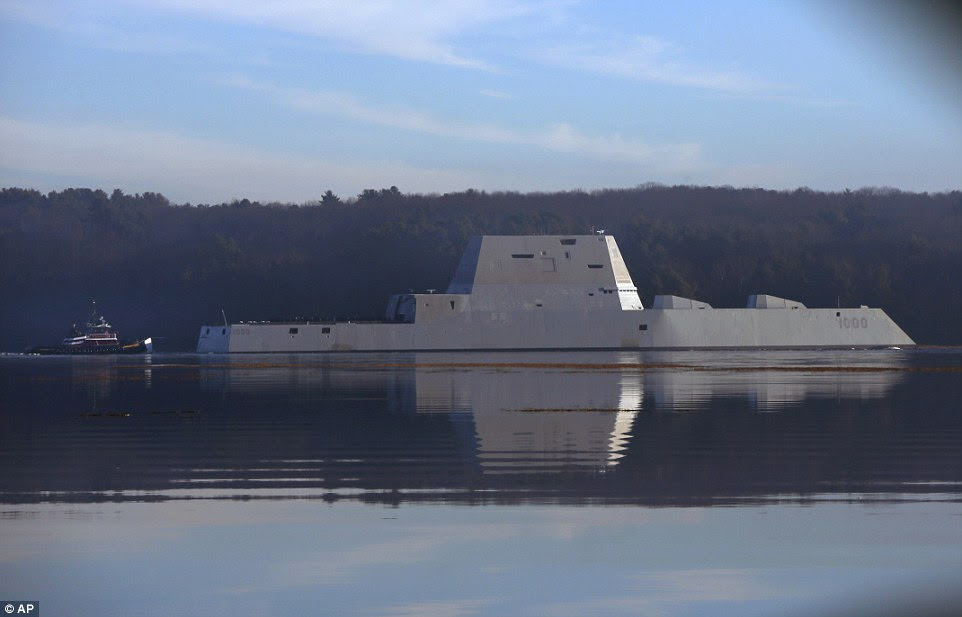
The superstructure that is composed of the bridge will be covered by armor equivalent thickness of their 16 inch gun. That is the slab sided design extended to the edge of the main deck typical of modern destroyers , like below the Zumwalt class, except cut the height of the superstructure in half. 

The ship has electric propulsion, new radar and sonar, powerful missiles and guns, and a stealthy design to reduce its radar signatureIf you took an anti ship missile and fired it at a WWII battleship, it would do superficial damage but not penetrate the armor protecting the bridge, the main battery gun turrets, the sides or deck covering the magazines and engine space. The armor protecting these areas was often as thick as the diameter of the guns, in hardened steel plates. So it struck head on would have to traverse 16 inches of steel, if struck at an oblique angle, even more.
Very possibly an antiship missile would simply bounce off the armor and explode harmlessly. If the missile had a lot of fuel left, it could start a surface fire with that fuel and its explosive charge,


WWII armor piercing shells were reduced explosion charge with delayed fuses and hardened cases and points to penetrate armor and explode within. A 16 inch shell was massive, a 2000 lb projectile and these are what the armor I described above is designed to protect against.
I suppose its possible to defeat armor with enough kinetic energy from a large antiship missile and shaped charges but the question is, what would they be used against? There are no more battleships.


The result of this conversion is a BBG that could sink any enemy surface action group protecting an enemy island or coastline, then strike antiaccess/area-denial targets such as antiship ballistic missiles, surface-to-air missile batteries, radars, air bases and and other enemy targets. Once it was safe enough to close within a hundred miles of the enemy coast, sixteen-inch guns with hypervelocity shells would come into play, destroying a half-dozen targets at a time with precision.


Could North Korea or Iran launch a nuclear-tipped missile to hit the US from a disguised container ship?
This is North Korea’s KN-18* MaRV ship killer missile. It has a maneuvering Hypersonic Glide vehicle with a 4 kiloton warhead and an accuracy of 7m CEP. Three of these were demonstrated on 26 August 2017.* [corrected missile name]
Their warhead reentry vehicle was obtained by cyber espionage from plans for the American Pershing -II missile and may have been copied by DPRK from the Chinese DF-21D missile after they obtained plans for the Pershing II.
Physical overpressure would likely kill the ship’s crew in the same way that a Thermobaric bomb does.
The KN-18 warhead has a radar seeker that can detect and identify the shapes of targets and terrain matching these with RCS templates stored in its memory. This means that it does not require active targeting updates.
It is very similar to the EMAD warhead seen on Iran’s missiles
China calls their version the WU-14
The point of the nuclear warhead is to create an over pressure that breaks the back of a ship.
Torpedoes are designed to do much the same by exploding under a ship’s keel, not actually hitting the ship.
In terms of intercept by an Aegis BMD vessel, this type of interceptor missile depends upon a radar operator predicting the Ballistic trajectory. If there is no ballistic trajectory interception by an Aegis missile becomes much more complicated.
This article below refers to the same missile incorrectly named as the KN-17 (designation subsequently revised by the Pentagon to KN-18):
the Soviet Union first developed a very primitive Anti Ship Ballistic Missile in 1962 known as the R-27K in Russia and as the SS-NX-13 in the west. This missile was abandoned due to SALT treaty negotiations, however it gave a lot of clues as to what a more modern Hypersonic Glide Vehicle could accomplish.
The R-27K used satellite targeting and then once launched homed in on the radar emissions from surface vessels. It was launched in a high lofted trajectory and could make targeting corrections of up to 30nm on re-entry. Against a target emanating radio-frequency transmissions, the SS-NX-13 was capable of a CEP of 0.1 to 0.2 nm.
The R-27K however did not have a hypersonic glide reentry vehicle. The chief advantage of a Hypersonic glide vehicle is to extend the range for engagement

(Chinese intelligence identified DPRK missile warhead yield in 2014. Accuracy of 7m CEP in August 26 tests was reported in Korean language news articles derived from ROK military intelligence disclosures)


In an all out war, nuclear tipped missles could render the Iowa class battleship useless, these can be used only in a limited war. 


The solution is a flying aircraft carrier.
see below....


A future battleship would give the Navy— and by extension the president—warfighting options other than the total annihilation of the enemy. Regular FONOPs already demonstrate the need for such options. The A2/AD threat will likely generate even more dangerous missions that only a durable battleship of the future can safely perform.